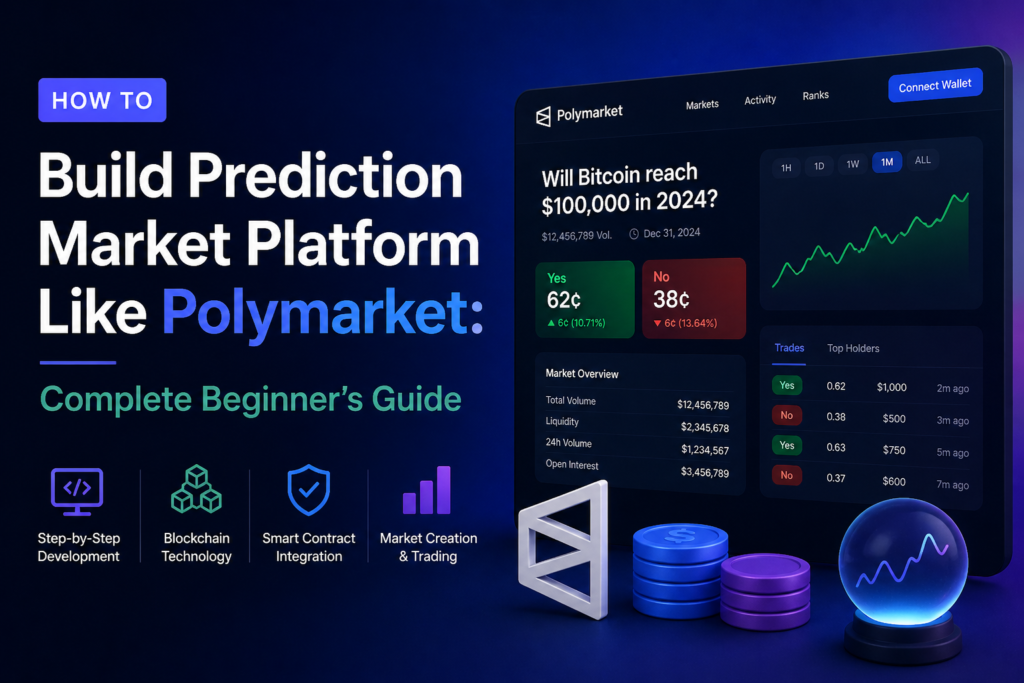
The rise of decentralized finance and data-driven decision-making has brought prediction markets into the spotlight. Platforms like Polymarket have demonstrated how users can trade on real-world event outcomes, creating a powerful blend of finance, forecasting, and technology. For startups and entrepreneurs, this opens a massive opportunity. If you’re planning to Build Prediction Market Platform, this beginner-friendly guide will walk you through everything you need to know.
What is a Prediction Market Platform?
A prediction market platform allows users to speculate on the outcome of future events—ranging from politics and sports to crypto prices and global trends. Participants buy and sell shares based on what they believe will happen, and prices fluctuate according to market sentiment.
The concept is simple, but the technology behind it is complex. This is where prediction market platform development becomes crucial. A well-built system ensures transparency, liquidity, and secure transactions.
Why Build a Platform Like Polymarket?
Polymarket’s success is driven by three key factors: decentralization, real-time data, and user engagement. Building a similar platform can help you:
Tap into a growing fintech niche
Generate revenue through transaction fees
Offer innovative financial products
Attract both retail and institutional users
However, replicating such success requires strategic planning and the right technology stack.
Step-by-Step Guide to Build Prediction Market Platform
1. Define Your Business Model
Before diving into development, decide how your platform will operate. Common revenue models include:
Understanding your audience and niche (crypto, sports, politics, etc.) is essential for long-term success.
2. Choose the Right Development Approach
There are two main ways to start:
Custom Development
Building from scratch gives full control but requires time, expertise, and higher investment.
Clone Script Solutions
Using ready-made solutions like a Polymarket clone script or Kalshi clone script can significantly reduce development time and cost. These scripts come with pre-built features, allowing faster deployment and scalability.
For beginners, clone scripts are often the most practical starting point.
3. Focus on Core Features
A successful prediction market platform must include:
User Dashboard: Easy navigation and portfolio tracking
Market Creation: Allow users/admins to create prediction events
Trading Engine: Real-time buying and selling of shares
Wallet Integration: Secure deposits and withdrawals
Liquidity Management: Ensures active trading markets
Data Oracles: Fetch real-world data for outcome validation
During prediction market platform development, these features should be optimized for speed, accuracy, and user experience.
4. Select the Right Technology Stack
Technology plays a vital role in platform performance. Consider:
Blockchain: Ethereum, Polygon, or other scalable networks
Smart Contracts: For transparent and automated transactions
Frontend: React or Vue for responsive UI
Backend: Node.js or Python for robust functionality
If you’re using a Polymarket clone script, much of this stack is already integrated, saving time and effort.
5. Ensure Legal and Regulatory Compliance
Prediction markets often operate in a regulated environment. Platforms like Kalshi, for example, comply with financial regulations in specific regions.
When planning to Build Prediction Market Platform, consider:
Local gambling and trading laws
KYC (Know Your Customer) requirements
AML (Anti-Money Laundering) policies
Using a Kalshi clone script can help align your platform with regulatory-friendly frameworks.
6. Implement Strong Security Measures
Security is non-negotiable in fintech platforms. Focus on:
A single vulnerability can lead to major financial and reputational losses.
7. Launch and Scale Your Platform
After development and testing, launch your platform with a clear go-to-market strategy:
Scaling requires continuous updates, user feedback integration, and feature enhancements.
Benefits of Using Clone Scripts
For startups with limited resources, clone scripts offer a practical solution:
Both Polymarket clone script and Kalshi clone script options allow businesses to enter the market quickly without compromising on quality.
Challenges to Consider
While the opportunity is huge, there are challenges:
Regulatory uncertainty
Liquidity management
User trust and adoption
Technical complexity
Addressing these challenges early in your prediction market platform development journey will improve your chances of success.
Final Thoughts
The prediction market industry is rapidly evolving, offering immense potential for innovation and profitability. Whether you choose custom development or leverage a Polymarket clone script, the key lies in building a secure, scalable, and user-friendly platform.
If you’re planning to Build Prediction Market Platform, start with a clear strategy, choose the right technology, and focus on delivering real value to users. With the right execution, your platform can become a powerful player in the next generation of financial markets.