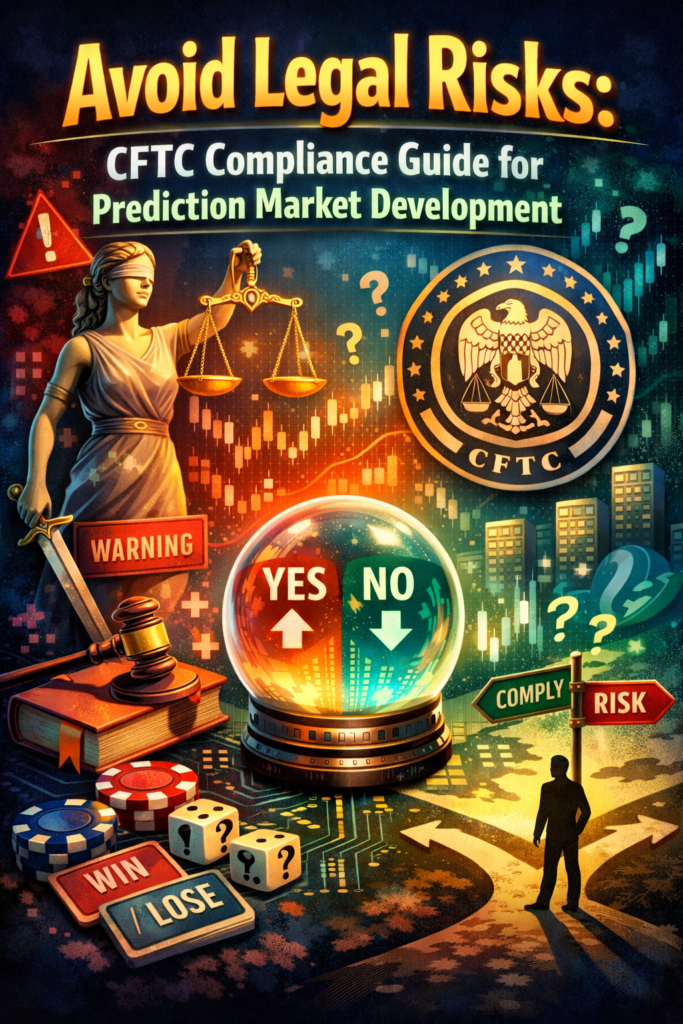
The rapid growth of the prediction market industry has opened new opportunities for businesses, investors, and tech innovators. Platforms inspired by polymarket are gaining popularity, allowing users to trade on real-world event outcomes. However, as this space expands, regulatory scrutiny is increasing—especially in the United States under the Commodity Futures Trading Commission (CFTC). For entrepreneurs planning CFTC Compliance Prediction Market Development, understanding legal frameworks is no longer optional—it’s essential.
Why CFTC Compliance Matters
Prediction markets operate at the intersection of finance, data, and speculation. Because they often resemble derivatives trading platforms, they may fall under CFTC jurisdiction. If your Prediction Marketplace Like Polymarket allows users to speculate on event outcomes using real money or crypto assets, it could be classified as a derivatives market.
Failure to comply with CFTC regulations can result in severe penalties, including fines, shutdowns, or legal action. This makes compliance a foundational element of any successful decentralized Prediction Market Development strategy.
Understanding the Regulatory Landscape
The CFTC oversees markets that involve futures, options, and swaps. Many crypto prediction platform like polymarket models operate in a regulatory gray area, particularly when built on blockchain technology. While decentralization offers transparency and efficiency, it does not exempt platforms from legal obligations.
For example, polymarket itself has faced regulatory action in the past, highlighting the importance of aligning operations with U.S. laws. Whether you’re building a polymarket clone or starting from scratch, you must evaluate whether your platform qualifies as a Designated Contract Market (DCM) or a Swap Execution Facility (SEF).
Key Compliance Requirements
To ensure successful CFTC Compliance Prediction Market Development, businesses should focus on the following areas:
1. Registration and Licensing
If your platform falls under CFTC jurisdiction, you may need to register as a regulated entity. This includes meeting strict reporting, auditing, and operational standards.
2. KYC and AML Policies
Know Your Customer (KYC) and Anti-Money Laundering (AML) protocols are essential for any crypto prediction platform like polymarket. These measures help prevent fraud, illegal trading, and financial crimes.
3. Market Integrity and Transparency
Maintaining fair trading practices is critical. Your Prediction Marketplace Like Polymarket must ensure accurate data feeds, transparent odds, and protection against market manipulation.
4. Event Contract Legitimacy
Not all event contracts are allowed. The CFTC prohibits markets that involve illegal activities, gaming, or events that could influence public policy negatively.
Challenges in Polymarket Clone Development
Creating a polymarket clone development project comes with unique legal and technical challenges. While cloning features like user interfaces, liquidity pools, and smart contracts is relatively straightforward, ensuring regulatory compliance is complex.
Many developers focus heavily on technology but overlook compliance. This is a major mistake. A well-designed polymarket clone that lacks legal safeguards is at high risk of failure. Regulatory authorities are increasingly monitoring decentralized platforms, making compliance a competitive advantage rather than a limitation.
Decentralization vs Regulation
One of the biggest debates in decentralized Prediction Market Development is whether decentralization can bypass regulatory frameworks. The answer is simple: it cannot.
Even if your platform operates through smart contracts and decentralized protocols, developers, founders, and operators may still be held accountable. Therefore, building a compliant crypto prediction platform like polymarket requires a hybrid approach—leveraging decentralization while adhering to legal standards.
Best Practices for Staying Compliant
To minimize risks and build trust, follow these best practices:
Consult Legal Experts: Engage professionals specializing in financial regulations and blockchain compliance.
Geo-Restrictions: Limit access in jurisdictions where your platform may violate local laws.
Clear Terms and Conditions: Define user rights, risks, and platform policies transparently.
Regular Audits: Conduct technical and legal audits to ensure ongoing compliance.
User Education: Inform users about risks and regulatory considerations associated with prediction markets.
These steps are crucial for any Prediction Marketplace Like Polymarket aiming to scale sustainably.
The Future of Prediction Markets
Despite regulatory challenges, the future of the prediction market industry remains promising. With advancements in blockchain technology, platforms are becoming more secure, transparent, and accessible.
However, compliance will play a defining role in shaping this future. Businesses investing in CFTC Compliance Prediction Market Development will not only avoid legal risks but also gain credibility in a competitive market.
As governments and regulatory bodies refine their stance on blockchain-based platforms, the demand for compliant polymarket clone development solutions will increase. Companies that prioritize legal frameworks alongside innovation will lead the next wave of growth in this industry.
Conclusion
Building a successful crypto prediction platform like polymarket requires more than just advanced technology—it demands a deep understanding of regulatory requirements. Whether you’re developing a polymarket clone or launching a new Prediction Marketplace Like Polymarket, ignoring CFTC guidelines can lead to significant setbacks.
By focusing on CFTC Compliance Prediction Market Development, businesses can create secure, trustworthy, and scalable platforms. In an industry where legality and innovation must go hand in hand, compliance is not a barrier—it’s the foundation for long-term success.